

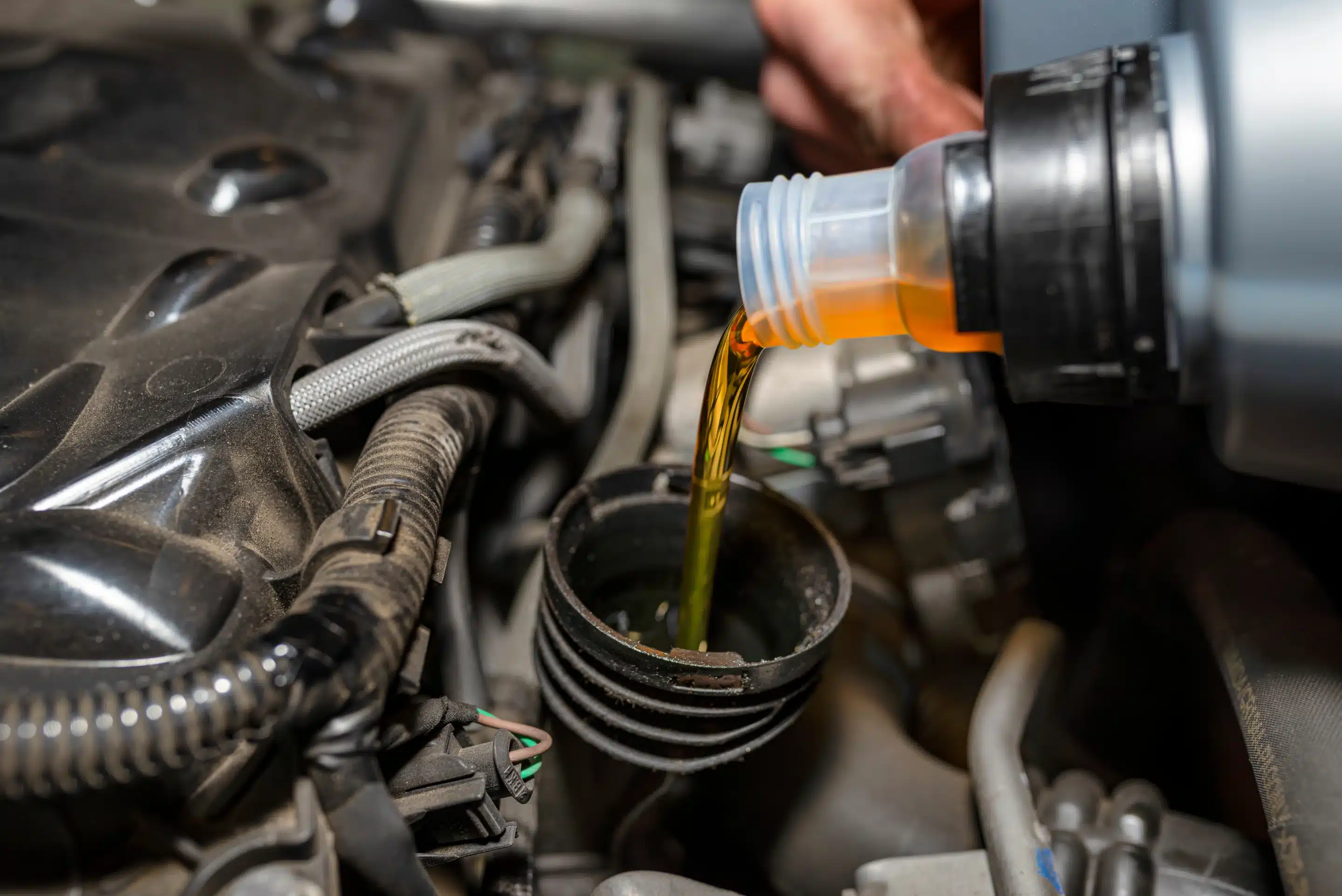
Keeping up with oil care can feel confusing, especially when you hear different advice about time, mileage, and when to change your oil. Many drivers want clear answers, and one of the biggest questions we hear is Do time intervals with oil really matter? At Express Auto Repair & Tires, we help drivers understand how time affects their car’s oil so they can protect their engine and keep their vehicle running at its best.
Why Time Still Matters Even When You Do Not Drive Much
You often hear about mileage and oil change intervals, but time plays an important role, too. Even clean oil eventually breaks down. Oil degrades due to heat, moisture, and natural wear within the engine. This means the oil becomes thinner, weaker, and cannot protect your engine as effectively.
What happens when oil sits too long?
Here are a few things that can happen when your vehicle goes too long without a fresh oil change, based on time:
- Oil becomes thick or sludgy
- Moisture builds up from short trips
- Contaminants settle in the engine
- Metal parts lose the clean oil film that protects them
- Engine damage becomes more likely
Even if your mileage is low, the oil still degrades over time. That is why most vehicles need an oil change at least once per year.
Oil Change Time vs Mileage: Which One Should You Follow?
Many drivers wonder which matters more: time or mileage. The truth is that both matter. Your engine’s needs depend on how often you drive, where you drive, and how your driving habits affect the oil.
When Mileage Should Guide You
Mileage is a strong indicator for drivers who use their vehicles daily. Most owner’s manuals give a mileage-based schedule. For many modern engines, the average oil change interval is:
- Every 3,000 to 5,000 miles for conventional oil
- Every 6,000 to 10,000 miles for synthetic oil
Your mileage and time both play a part in how often you should really change your engine oil.
When Should Time Guide You
If you drive less than the average person, take frequent short trips, or have your vehicle sit for long periods, your oil may break down faster than your mileage indicates. Oil does not get hot enough to burn off moisture during short trips. This causes the oil to degrade faster.
This is why mechanics and manufacturers recommend oil changes every six months. Even if you have not reached the mileage mark since your last oil change, the oil still ages.
How Oil Degrades Over Time and Why It Matters
Motor oil goes through a lot while it protects your engine. Combustion, heat, dirt, and contaminants slowly change the oil quality. Here is what happens inside the engine as time passes:
1. Oil absorbs moisture
Moisture builds up inside engines that sit for long periods. This weakens the oil and increases wear.
2. Oil becomes thick or thin
Oil that sits too long becomes either too thick to flow or too thin to protect your engine.
3. The oil filter fills up
A clogged oil filter cannot trap dirt, allowing contaminants to pass through your engine.
4. Engine oil loses additives
Modern oil has chemicals that reduce wear. These additives fade with time.
5. Oil life monitors are not perfect
Your oil life monitor can help, but it does not directly measure oil quality. It bases the estimate on driving habits and temperature, not on a true oil analysis.
This is why checking your oil level and the condition of the oil on the dipstick are still important. Even clean oil can degrade without you noticing.
Time and Mileage: How to Find the Right Change Interval
Every driver has different habits, so your ideal change interval depends on how and where you drive.
You may need more frequent changes if:
- You drive short trips around Irving
- You sit in traffic often
- You tow heavy loads
- You drive an older vehicle
- You live in extremely hot or cold climates.
- You park the car for extended periods
These habits make your oil break down faster. When your driving routine includes less mileage but more short trips, time becomes the main factor.
You can follow longer intervals if:
- You drive mostly on highways
- You use full synthetic oil
- Your vehicle has a modern engine
- You maintain a clean engine and follow your maintenance schedule
Even then, it is safer to change the oil at least once every six months or once per year.
What Happens If You Wait Too Long?
Many people wonder if it is okay to be late for an oil change. Here is the truth about oil change delays:
- Oil may lose its strength to protect your engine
- The engine runs hotter
- Parts wear out faster
- Contaminants build up
- The engine can suffer long-term harm
Changing your oil too often isn’t necessary, but waiting too long can cause engine damage. Clean oil helps your engine last longer, run smoother, and avoid expensive repairs.
How To Check If It Is Time for an Oil Change
If you are unsure whether it is time for a change, try these quick checks:
Look at the dipstick.
Check your oil level and color. Dark, dirty, or gritty oil means it is time for an oil change.
Pay attention to sound.
A louder, rougher engine noise can signal degraded oil.
Watch your dashboard.
Your oil life monitor gives helpful reminders, but do not rely on it alone.
Check your maintenance records.
If it has been 6 months or more since your last oil change, it is likely time for another.
Choosing Synthetic vs Conventional Oil
Synthetic oil lasts longer and better withstands heat than conventional oil. Many drivers choose synthetic because it keeps the engine cleaner and allows longer intervals. Conventional oil is more affordable but needs more frequent changes.
If you are unsure what your vehicle needs, follow the owner’s manual or talk to a trusted technician.
Why Regular Oil Changes Protect the Engine
Fresh engine oil helps:
- Reduce friction
- Keep parts clean
- Control heat
- Remove contaminants
- Improve performance
- Prevent engine damage
This is why your vehicle’s health depends on consistent oil care based on mileage and time.
Final Thoughts
So, do time intervals with oil really matter? Yes, they do. Time affects oil just as much as mileage. Oil weakens, absorbs moisture, and loses its ability to protect your engine. Regular oil changes help your vehicle last longer and run better. Express Auto Repair & Tires is here to help drivers in Irving keep their engines in top shape with reliable care that fits their driving habits.
FAQs
1. Does time really matter for an oil change?
Yes, oil breaks down even when the car is not driven much. Moisture, heat, and additives slowly degrade the oil.
2. What is the 30-60-90 rule for cars?
It is a general guide to check parts like filters, belts, hoses, and fluids at 30,000, 60,000, and 90,000 miles. It is not a rule for oil changes.
3. How long between oil changes time wise?
Most vehicles need an oil change every six months, even with low mileage.
4. Is it okay to be late for an oil change?
A little delay is acceptable, but waiting too long can cause wear and engine damage.
5. Should I change my oil based on time or mileage?
Both matter. If you drive often, follow mileage. If you drive less, follow time.
6. How do I know my oil is getting old?
Check your dipstick. If the oil looks dark, thin, thick, or dirty, it is time for a change.
7. Do modern engines need fewer oil changes?
Some do, especially with synthetic oil, but the oil still degrades over time.
8. How often should you really change your oil?
Most drivers should follow a mileage or time interval. For many cars, changing your oil every six months is enough unless your driving habits require more frequent care.
9. What happens if the oil sits too long?
The longer it sits, the weaker the oil becomes. Old oil doesn’t protect your engine well and can harm it, affecting its health and performance.
10. Should you change your oil based on mileage or time?
Both matter. If you drive often, follow miles vs time. If you rarely drive, get your oil changed by time since your car’s oil won’t last forever.
If it has been six months or longer since your last oil change, it is time for a change. Bring your car to Express Auto Repair & Tires in Irving, Texas. We offer full-service oil changes, all grades of motor oil, premium oil change options, oil filter changes, and complete safety checks. We also provide brakes, tune-ups, diagnostics, suspension repairs, new and used tires, wheel alignment, air conditioning and heating repairs, and more.
Visit us today at 107 N Story Rd Irving, TX 75061 to protect your engine and keep your vehicle running strong. Call us at (972) 636-4903 to book an appointment. Contact us today!
Also Read:
How Often Are Oil Changes Actually Needed? (The Truth About When to Change Your Oil)
The Dangers of Neglecting Brake Oil Changes and How to Prevent Them
Best Auto Oil Change Near Me: Who Can I Trust For an Oil Change?
Recent Comments